New Order Rising: The Revolution of Authentic Influence

The gatekeepers are gone.
For decades, they stood at the gates of influence — network executives, publishing houses, record label A&R departments, and editorial boards. They decided who got a platform, whose voice mattered, and which stories were worth telling. If you wanted to reach the world, you needed their blessing, their budget, and their approval.
But something fundamental has shifted.
The Fall of the Old Order
Traditional media operated on scarcity. Limited broadcast hours. Finite pages in magazines. A handful of primetime slots. This scarcity created power — the power to choose, to filter, to control. And with that power came gatekeepers who decided what the public would see, hear, and believe.
The economics were simple: reach required resources, and resources required institutional backing. Want to broadcast your message? You needed a television network. Want to publish your ideas? You needed a publisher. Want to distribute your music? You needed a record deal.
This system wasn’t designed for authenticity. It was designed for scalability, profitability, and control. Messages were polished, sanitized, and carefully crafted to appeal to the broadest possible audience. Authenticity was often the first casualty.

The Digital Disruption
Then came the internet. Then came smartphones. Then came social media platforms, podcasting, YouTube, Substack, TikTok, and a thousand other channels that didn’t require permission.
Suddenly, the barriers crumbled.
A teenager with a phone could build an audience larger than some television networks. A writer could reach millions without a publishing deal. A musician could distribute albums globally without a record label. The tools of mass communication, once locked behind institutional walls, became available to anyone with creativity and determination.
But this wasn’t just about technology. It was about a fundamental shift in what audiences valued.
The Authenticity Advantage
Today’s audiences are tired of corporate speak, manufactured personas, and carefully focus-grouped messages. They crave something real. Something human. Something authentic.
They want to follow creators who show their process, share their struggles, and build in public. They want communities, not consumers. They want conversations, not broadcasts. They want to feel connected to the humans behind the content, not the polished facade of a brand.
This is where traditional media falters and authentic influence thrives.
Because authenticity can’t be manufactured in a boardroom. It can’t be scripted by a committee. It emerges from real people sharing real perspectives, building real relationships with real communities.
The New Architects of Influence
The new order isn’t built on institutional power. It’s built on trust, consistency, and community.
Consider the creator who shares their entrepreneurial journey — the failures, pivots, and late-night doubts alongside the victories. Their influence doesn’t come from a title or a network; it comes from the community that sees themselves in that journey.
Consider the educator who breaks down complex ideas with clarity and passion, building a following not through advertising budgets but through genuine value delivered consistently.
Consider the artist who engages directly with fans, co-creating experiences and building a movement rather than just releasing products.
These are the new architects of influence. They don’t need permission from gatekeepers because they’ve built something more powerful: authentic connections with communities who genuinely care.
Community-Driven Growth
The revolution isn’t just about individual creators — it’s about the communities that form around them.
These communities are active participants, not passive consumers. They share content, remix ideas, contribute perspectives, and become evangelists for the creators they believe in. They’re invested not just in the content but in the person creating it and the community experiencing it together.
This creates a fundamentally different dynamic. Traditional media was one-to-many: a single source broadcasting to millions of isolated individuals. The new model is many-to-many: creators and communities in constant dialogue, co-creating value and meaning.
When a creator’s community rallies behind them, no algorithm change or platform shift can stop their momentum. The relationship isn’t mediated solely by a platform — it’s rooted in genuine connection.
Building Your Ecosystem
This new landscape requires a different approach to building influence. It’s not about going viral or gaming algorithms (though those can help). It’s about building resilient, interconnected ecosystems where every piece of content feeds the next.
A video becomes a blog post. A blog post inspires a podcast episode. A podcast episode generates social media discussions. Social media discussions spark new video ideas. Each platform reinforces the others, creating a self-sustaining cycle of growth.
This is the media ecosystem approach — building not just content but systems. Systems that work while you sleep. Systems that serve your audience across multiple touchpoints. Systems that aren’t dependent on any single platform’s whims.
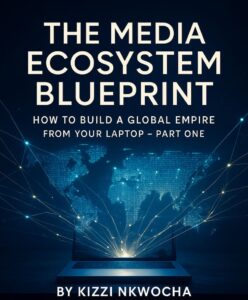
Kizzi Nkwocha explores this concept in depth in The Media Ecosystem Blueprint, a guide for creators ready to move beyond scattered content creation and build something lasting. The book outlines how to construct interconnected media systems that amplify your message and create sustainable influence.

The ideas from the blueprint have even inspired Empire, a 12-track album that captures the spirit of this revolution in sound — from “The Gatekeepers Are Gone” to the triumphant title track “Empire,” each song celebrates the journey from vision to victory in the digital age.
The Revolution Continues
We’re still in the early stages of this transformation. Traditional institutions haven’t disappeared — they’re adapting, acquiring successful creators, and trying to reclaim relevance. But the power dynamic has fundamentally shifted.
Today, authenticity is the currency of influence. Community is the foundation of sustainability. And creativity is the ultimate competitive advantage.
The new order is rising. Not in corporate headquarters or media boardrooms, but in home studios, coffee shops, and late-night creative sessions. It’s built by individuals who refused to wait for permission and communities who rallied around authentic voices.
The gatekeepers are gone. The question now is: what empire will you build?