How Do You Negotiate About Something That Hasn’t Happened Yet?
In 2023, Hollywood’s writers went on strike partly over a technology most of them had barely used.
The Writers Guild of America walked out on 2 May and stayed out for 148 days. Pay and streaming residuals were central, but so was a question nobody could fully answer: what would generative AI do to writing?
Think about how strange that negotiation was.
Neither side knew what the technology would be capable of in two years, let alone four. The studios couldn’t promise anything about a future they couldn’t see. The writers couldn’t specify protections against problems that didn’t exist yet.
So how do you strike a deal when nobody can predict the outcome?
The answer they reached is quietly brilliant.
The contract that ended the strike in late September didn’t ban AI. It didn’t try to predict anything. Instead, it settled who decides and who has to tell whom. A writer can choose to use AI tools, but a studio can’t require it. Material generated by AI can’t count as “literary material”, so it can’t be used to undercut a writer’s credit or pay. And if a studio hands a writer something produced by AI, it has to say so.
Here’s the clever part. None of those terms depends on knowing how good AI will become. They work whether the technology stalls or races ahead.
Most of us try to negotiate outcomes. We argue about the number, the result, the end state. That works when the future is predictable. When it isn’t, arguing about outcomes becomes a contest of guesses, and whoever guesses wrong loses.
When the future is uncertain, negotiate the rules instead. Who gets to decide? What has to be disclosed? When do we come back to the table?
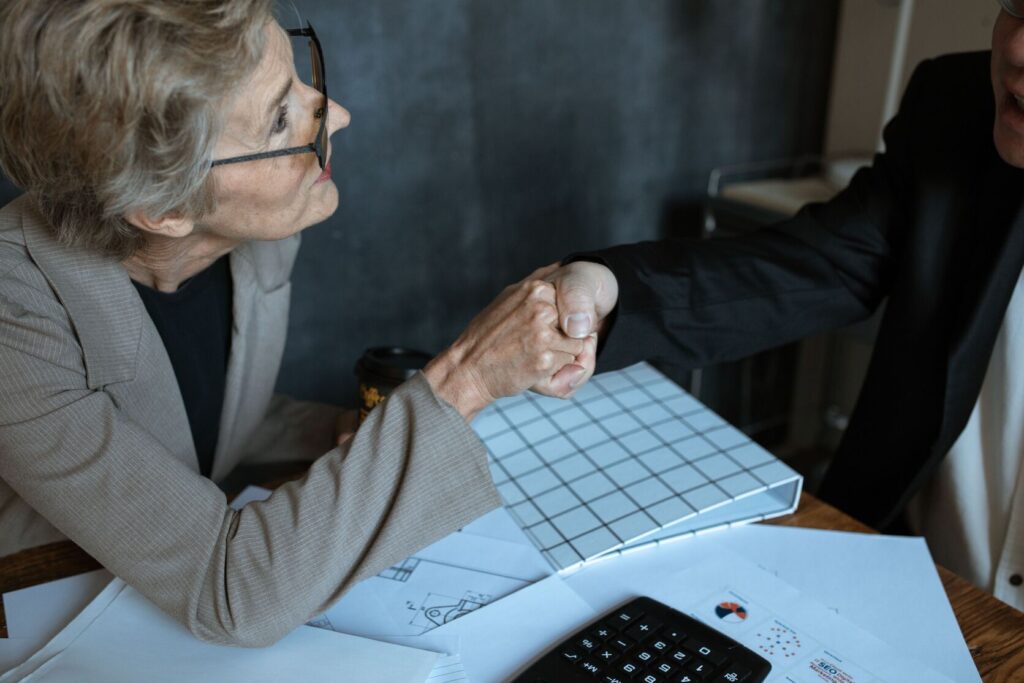
You can use this far from Hollywood. A business partner proposes a fixed profit split for a venture neither of you can forecast. A family is deciding how to care for an ageing parent whose needs will change. Fight over the numbers now and you’ll fight again later. Agree how decisions get made, and later becomes manageable.
Reading the AI terms, I recognised one of the core ideas in Marta Skarbek’s This is Negotiation: when you can’t control what happens next, put your energy into controlling how you’ll decide.
So, a question for anyone who has ever signed a long contract. Would you rather have a deal that guesses the future correctly, or one that doesn’t need to? And is there such a thing as a contract that’s too flexible?
Find the book on Amazon: https://www.amazon.com/Marta-Skarbeks-This-Negotiation-negotiator/dp/B0D7VXFV7S
#Negotiation, #ArtificialIntelligence, #AI, #FutureofWork, #WritersGuild, #Hollywood, #Contracts, #NegotiationSkills, #Leadership, #Uncertainty, #BusinessStrategy
Want more like this?
Get an occasional email when there’s something new worth reading. No spam, unsubscribe anytime.
By subscribing you agree to receive occasional emails about new releases. Unsubscribe anytime by replying to any email.