You’re Probably Wrong About Strangers, and It May Be Costing You
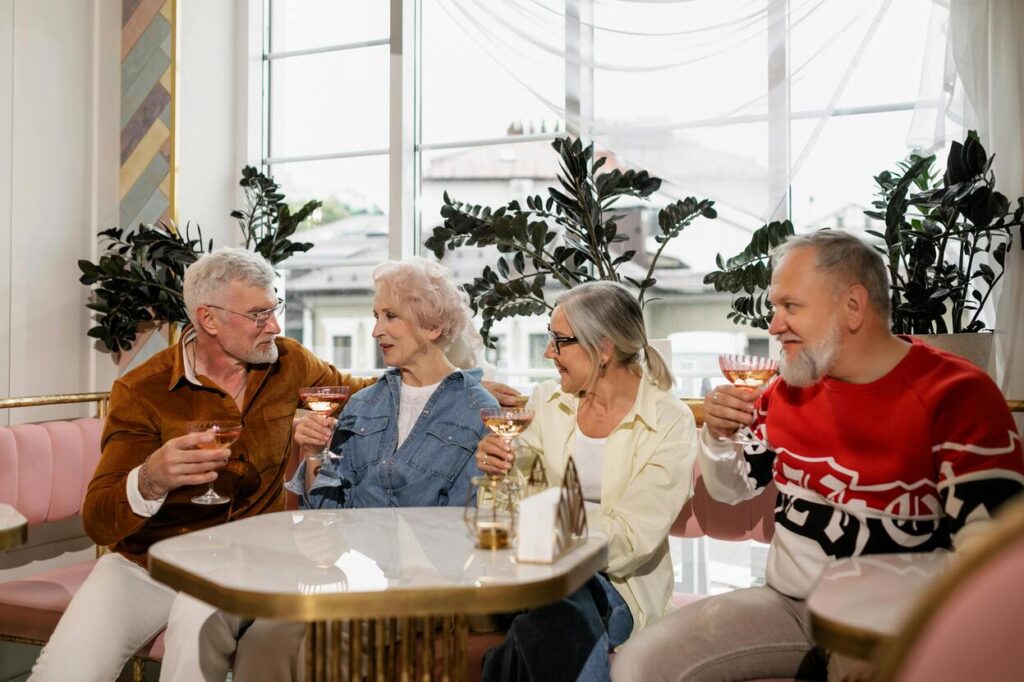
If you dropped your wallet in the street today, what are the chances a stranger would hand it in?
Hold on to your number for a moment.
The World Happiness Report published in March 2025 looked at exactly this. Researchers compared how often people expect a lost wallet to be returned with how often wallets actually are returned when they’re dropped as an experiment. The real return rate was roughly twice what people predicted.
We’re wrong about each other by about a factor of two, and always in the pessimistic direction.
On its own that would be a nice thing to know. The report goes further. It found that believing others would return your wallet is a strong predictor of how happy a population is. People who expect kindness tend to be happier, and that’s about the expectation, before any kindness has actually reached them.
Think about where your picture of strangers comes from. It probably doesn’t come from strangers. Most of the ones you meet hold the door, apologise when they bump into you and tell you you’ve dropped a glove. Your picture comes from the news, from social media, from the one bad encounter you still remember from 2017. Bad behaviour gets reported and decency doesn’t, so the picture we carry is far darker than the people we actually meet.
But here’s the part that I find uncomfortable.
If I expect the worst of people, I act accordingly. I don’t ask for help. I don’t start the conversation. I keep my head down on the train. And every one of those small withdrawals removes a chance for somebody to prove me wrong. My pessimism never gets tested, so it never gets corrected, and it stays with me feeling like good sense.
The same report found that sharing meals with others is strongly linked to wellbeing in every region of the world. It also found that in 2023, 19% of young adults said they had no one they could count on for support, up 39% since 2006.
I’m not suggesting you leave your front door unlocked. Bad people exist. But most of us have set the dial far too low, and it costs us in ways we never notice, because what we lose is things that never happened: help we didn’t ask for, a friendship that never got started.
A small experiment, then. This week, ask a stranger for something minor. Directions, a recommendation, the time. See what happens.
How we see other people, and how much of our own mood follows from it, runs right through my book, Life’s a Mess: Finding Your Smile When Sh*t Hits the Fan.
What was your number? And where do you think you got it from?
https://www.amazon.com/Lifes-Mess-Finding-Your-Smile/dp/B0DGDFX2FG/
#Happiness, #Kindness, #Trust, #WorldHappinessReport, #Wellbeing, #Positivity, #Mindset, #PersonalDevelopment, #Community, #MentalHealth, #KizziNkwocha
Want more like this?
Get an occasional email when there’s something new worth reading. No spam, unsubscribe anytime.
By subscribing you agree to receive occasional emails about new releases. Unsubscribe anytime by replying to any email.